
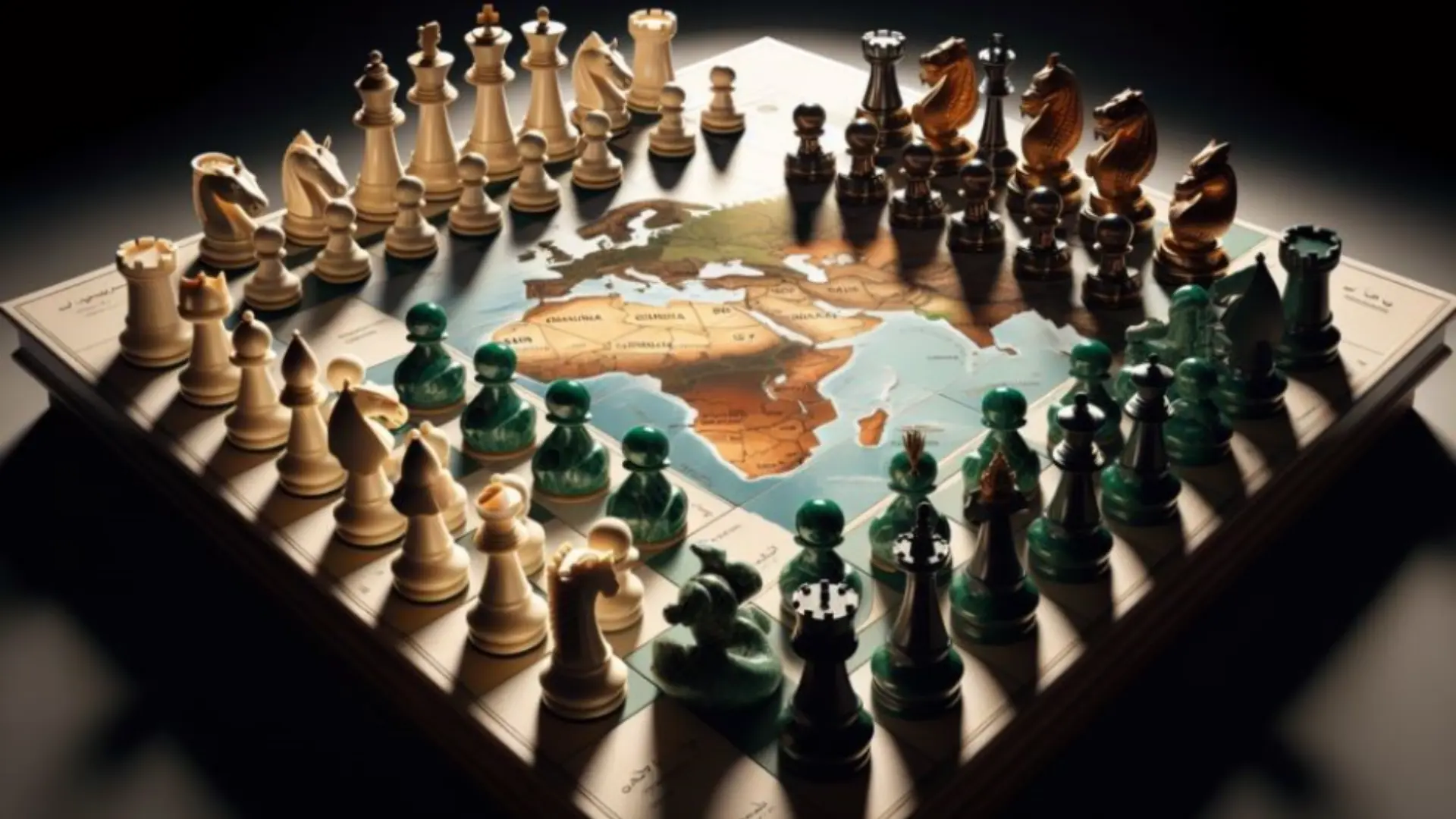
The recent eruption of conflict in the Middle East, marked by direct military exchanges between Israel, the US, and Iran, is not an isolated event. To view it as a simple case of “Iranian aggression,” as is common in Western discourse, is to ignore the deep historical and economic fault lines that have been grinding against each other for decades.
The missile barrages and drone attacks that have scarred the region, including the UAE, are but the violent symptoms of a much larger geopolitical realignment: the painful transition from a unipolar, Western-led world order to a multipolar reality where new powers, led by the BRICS+ nations, demand their place at the table. This is not merely a battle of ideologies, but a raw contest for economic influence, strategic autonomy, and the very architecture of global power.
The Post-Colonial Chessboard and Historical Grievances
To understand the present, one must look to the past. The relationship between the West and many nations in the Global South is built on a foundation of colonial and post-colonial exploitation. The case of Iran is archetypal. The 1953 coup, which saw the democratically elected Prime Minister Mohammad Mossadegh overthrown with the help of British and American intelligence, was not about democracy or human rights.
It was about oil. Mossadegh’s crime was his intention to nationalize Iran’s oil industry, diverting its wealth from Western corporations to the Iranian people. The subsequent installation of the Shah, Mohammad Reza Pahlavi, secured Western energy interests but created a leadership seen by many Iranians as illegitimate and subservient.
This historical grievance became the fertile ground from which Ayatollah Khomeini’s 1979 Islamic Revolution grew, establishing a state whose foundational principle was resistance to foreign domination. This is a story repeated across the developing world, where the post-World War II era was defined by a struggle to reclaim sovereignty from former colonial powers who were reluctant to relinquish their foreign wealth and influence.
From Unipolar Moment to Multipolar Challenge
The collapse of the Soviet Union in 1991 ushered in the “unipolar moment,” an era of unprecedented American dominance. The prevailing belief was that the rest of the world would gradually integrate into this Western-led liberal order. This assumption fundamentally underestimated the ambition of rising powers, most notably China. China’s economic miracle, lifting hundreds of millions out of poverty, was not achieved by challenging the system head-on, but by mastering it. As China grew from a regional player into the world’s factory and a technological powerhouse, it began to translate its economic weight into geopolitical influence.
Simultaneously, a resurgent Russia, feeling betrayed by NATO’s eastward expansion despite what it considered promises to the contrary, began to push back. The first clear warning came from President Putin in 2007. The subsequent events, particularly the 2014 split in Ukraine, were clear indicators of Russia’s refusal to accept a subordinate role in its own sphere of influence.
This confluence of interests led to the strengthening and expansion of the BRICS group (Brazil, Russia, India, China, South Africa). With the recent inclusion of major energy players like the UAE and Saudi Arabia, as well as Iran and Egypt, the bloc has transformed into BRICS+. It is no longer just an economic talking shop but a substantive counterweight to the G7, representing a significantly larger share of the global population and, increasingly, global GDP. These nations do not necessarily share a uniform ideology, but they are united by a common desire for a more equitable global system, one not solely dictated by Washington and its allies.
Economic Warfare as the Prelude to Conflict
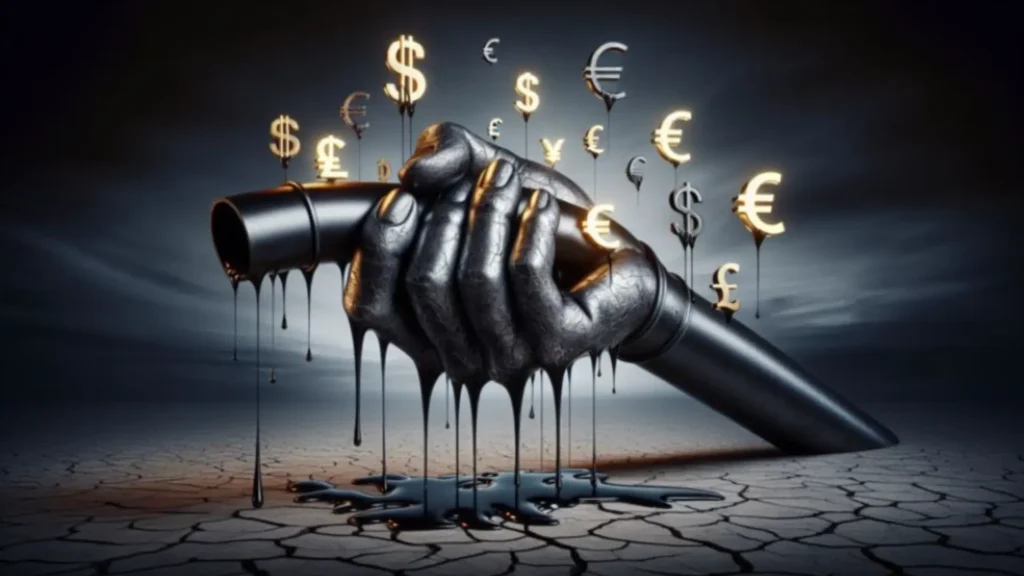
Long before the first missiles were fired, a different kind of war was already being waged: an economic war. For years, the primary tool of Western foreign policy against nations like Iran has been a regime of suffocating sanctions. The strategy is straightforward: cripple a nation’s economy, primarily by restricting its ability to export oil and access the global financial system, and thereby foment popular discontent to trigger regime change. This policy, however, rests on a flawed assumption that economic collapse will neatly translate into a pro-Western political outcome.
In Iran’s case, this strategy has inflicted immense hardship on the populace, leading to hyperinflation and economic distress. Yet, it has failed to dislodge the clerical establishment. The system’s resilience lies in its deep-rooted structure and its ability to frame the economic hardship as a direct result of foreign aggression, thereby rallying a significant portion of the population. Furthermore, this economic pressure has had the unintended consequence of pushing Iran, and other sanctioned nations, closer to the BRICS+ camp. China and India, as massive energy consumers, have become indispensable economic lifelines, creating a parallel economic ecosystem less susceptible to Western financial coercion. The weaponization of the US dollar has, ironically, accelerated the search for alternatives, strengthening the appeal of de-dollarization initiatives within the BRICS+ framework.
Conclusion: The Inevitable Clash
The current conflict in the Middle East is the logical, violent outcome of these intersecting forces. It is a clash between a declining, yet still powerful, Western order attempting to preserve its dominance, and a rising cohort of nations demanding a multipolar future. The Gulf States, including the UAE, are caught in the crossfire. Having successfully cultivated an image of stability and prosperity while building strong economic ties with both the West and the East, they now face the collateral damage of a great power conflict playing out on their doorstep.
The notion that this crisis will end with Iran crumbling and becoming a pro-Western ally is a dangerous fantasy. The structure of the Islamic Republic is designed for resilience. Likewise, it is naive to believe that China, Russia, and India would stand by and allow a key energy-rich nation on their doorstep to be absorbed into the Western sphere of influence.
The chessboard is far more complex. The most likely outcome is not a decisive victory for either side, but a grueling period of volatility and adjustment. The world is being forced to find a new equilibrium, one that acknowledges the irreversible shift in global economic and political power away from the Euro-Atlantic core and towards the rising giants of Asia and the Global South. This is the turbulent reality in which we must now navigate, where the old rules no longer apply and the new ones are being written in real-time.